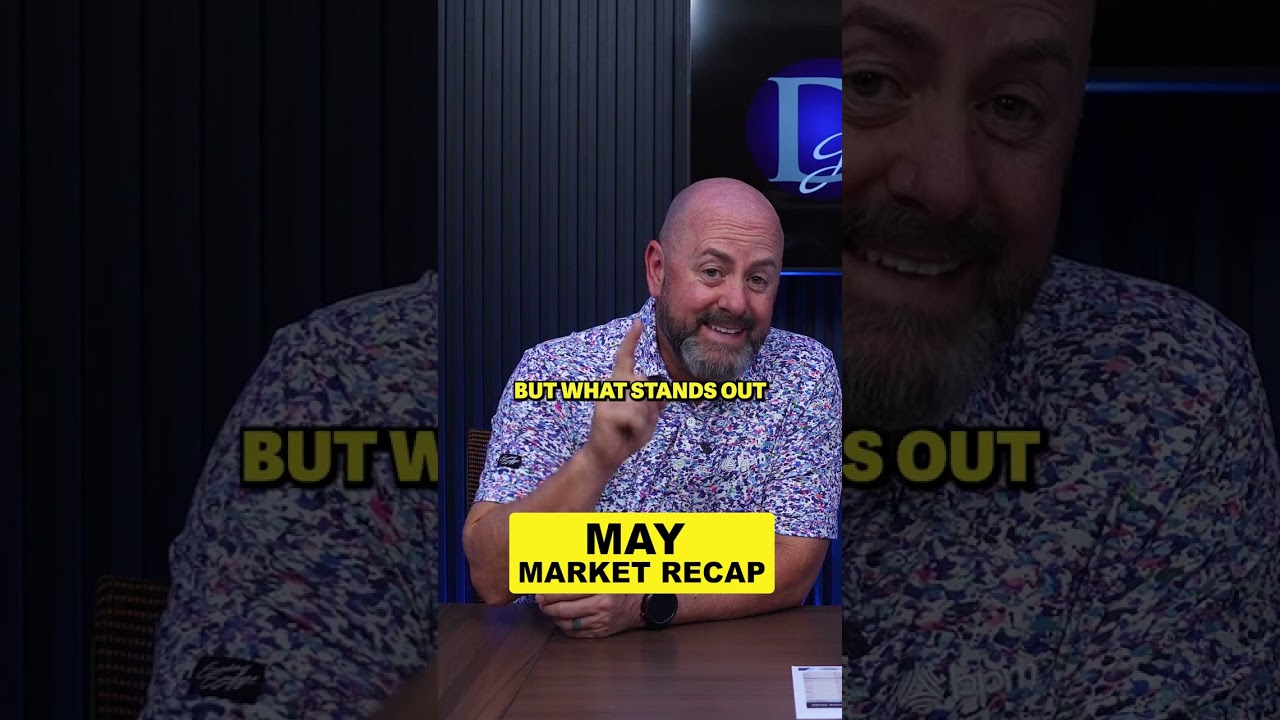
May 2026 Monthly Recap: What Moved Markets, Tech, and Everyday Life
May 2026 Monthly Recap: What Moved Markets, Tech, and Everyday Life
May is often a “bridge month”—late-spring momentum meets mid-year planning. A solid monthly recap isn’t just a highlight reel; it’s a chance to connect dots between headlines, your goals, and what to do next.
This May 2026 recap synthesizes the kinds of themes that tend to define a modern monthly review—markets and inflation expectations, the practical evolution of AI at work, consumer and housing signals, and a straightforward framework you can use to translate all of it into decisions for June.
> Note: The referenced YouTube Short has no publicly available transcript. This article is an original, standalone synthesis inspired by the idea of a monthly recap—not a reformat of the video.
---
1) The big picture: “Signals” beat “noise”
By the time May ends, the year’s story is usually clearer: what’s sustaining, what’s fading, and what’s merely loud. The most useful approach is to watch signals that change behavior—spending, hiring, investing, and planning.
Three signal categories stood out this month:
- Macro signals: inflation expectations, rates, and employment dynamics.
- Technology signals: AI moving from novelty to workflow.
- Consumer signals: everyday affordability, discretionary spending, and housing decisions.
A recap should answer one question: What changed enough in May that I should act differently in June?
---
2) Markets and the economy: Why “rates + inflation” still drive decisions
Even when you’re not an active investor, rate and inflation expectations ripple into real life—mortgage payments, business lending, credit cards, and the cost of carrying inventory.
Key macro ideas to keep in mind
- Inflation is a “basket,” not a single number. Households feel inflation unevenly (food, housing, insurance, services). The headline figure matters, but your personal basket matters more.
- Rates influence timelines. When borrowing costs are high (or uncertain), people delay big purchases; businesses may slow hiring or prioritize efficiency.
- “Real” performance matters. Returns and wages are best evaluated after inflation.
If you’re tracking the economy, rely on primary sources instead of hot takes:
- The Federal Reserve provides clarity on policy goals and the role of interest rates.
- BLS and BEA data help you separate feelings from facts.
Practical takeaway for June: If you’re making a large purchase, refinancing decision, or setting pricing, base your plan on ranges (best/base/worst case) rather than a single-rate assumption.
---
3) AI and productivity: The shift from “tools” to “systems”
May 2026 continued a trend that’s been building for years: AI isn’t just a tool you “try.” It’s becoming an operating layer across writing, analytics, customer support, and internal workflows.
What changed in practice
- From experimentation to standardization: Teams are increasingly building repeatable prompts, templates, and QA processes.
- From single tasks to pipelines: Instead of “write one email,” people build systems: research → outline → draft → compliance check → publish.
- From speed to governance: The more AI output touches customers, the more you need brand voice rules, review steps, and data handling policies.
A simple AI workflow you can adopt in June
- Define the job: “Summarize customer feedback into 5 themes.”
- Set guardrails: What sources are allowed? What can’t be inferred?
- Add a human checkpoint: Someone validates claims, tone, and sensitive details.
- Capture the pattern: Turn the winning prompt into a reusable SOP.
Practical takeaway for June: Choose one recurring task (weekly report, meeting notes, FAQ drafts, lead qualification) and build a small, documented system around it.
---
4) Consumer and lifestyle trends: The “selective spending” era
A recurring pattern in recent years is selective spending: consumers remain willing to pay for what feels essential or high-value, but they scrutinize everything else.
What that often looks like in real life:
- More comparison shopping (price tracking, switching brands, bundling).
- Trading down in some categories while “protecting” a few favorites.
- Fewer impulse buys when budgets feel tight—especially for big-ticket items.
For businesses and creators, this means messaging matters:
- Proof beats hype: show outcomes, demos, case studies, and clarity.
- Fewer features, more benefits: translate capabilities into results.
- Lower friction offers: trials, guarantees, transparent pricing.
Practical takeaway for June: Audit your top 3 subscriptions and recurring expenses. Keep what you actively use; renegotiate or cancel the rest.
---
5) Housing and real estate: Affordability shapes behavior
Housing continues to be a core driver of household confidence. Whether someone is buying, selling, renting, or staying put, the same forces apply: financing costs, supply, and local wage growth.
Two sensible ways to monitor housing without getting overwhelmed:
- Track the 30-year fixed mortgage rate trend to understand affordability pressure.
- Watch local inventory and days on market—because national headlines often miss what’s happening in your zip code.
Practical takeaway for June: If you’re considering a move, run a “stay vs. move” comparison: total monthly payment, commute/time cost, and a realistic maintenance budget.
---
6) Business and career: Mid-year alignment beats mid-year panic
May is a good month to ask: Are you still executing the plan you wrote in January—or did the year change and you didn’t?
For business owners and teams
- Re-forecast with humility: Use Q1–Q2 actuals to update targets.
- Prioritize operational leverage: reduce cycle time, rework, and handoffs.
- Invest in distribution: content, partnerships, email lists, and referral loops.
For individuals
- Skill stacking wins: AI literacy + communication + domain knowledge.
- Keep receipts of impact: quantify outcomes (revenue, time saved, retention improved).
- Build optionality: one extra income stream, one certification, one network push.
Practical takeaway for June: Write a one-page “value report” for yourself: your 3 biggest wins, 2 measurable outcomes, and 1 capability you’re building next.
---
7) A simple May recap template (use this every month)
If you want your monthly recap to translate into better decisions, keep it structured and short.
The 10-minute monthly recap
1) What happened (facts):
- 3–5 bullet points of events/results.
2) What mattered (signals):
- What changed behavior? What’s likely to persist?
3) What I learned (insights):
- One lesson about money, work, health, relationships, or systems.
4) What I’ll do next (actions):
- 3 actions for June, each with an owner and date.
5) What I’ll stop doing (subtractions):
- 1 commitment to remove, pause, or delegate.
---
8) June 2026 outlook: Three practical moves
A recap is only useful if it affects the next month. Here are three moves you can make immediately:
- Scenario-plan one important decision. Don’t guess one outcome—plan for three.
- Systematize one workflow with AI. Document it. Add a review checkpoint.
- Tighten one spending category. Cut “leaks,” then redirect savings toward a goal.
May 2026, in essence, reinforces a durable theme: people and organizations that build systems—not reactions—tend to gain ground. Use this recap to enter June with fewer guesses and more deliberate momentum.
---
Sources and further reading
To validate data points and deepen your understanding, use these primary and authoritative references:
- Federal Reserve policy and data resources
- U.S. Bureau of Labor Statistics (CPI, employment)
- U.S. Bureau of Economic Analysis (GDP, personal income)
- OECD AI policy and analysis
- Freddie Mac Primary Mortgage Market Survey
---
Source video: Watch "May 2026 Monthly Recap" on YouTube by DiRaffaele Youtube Videos