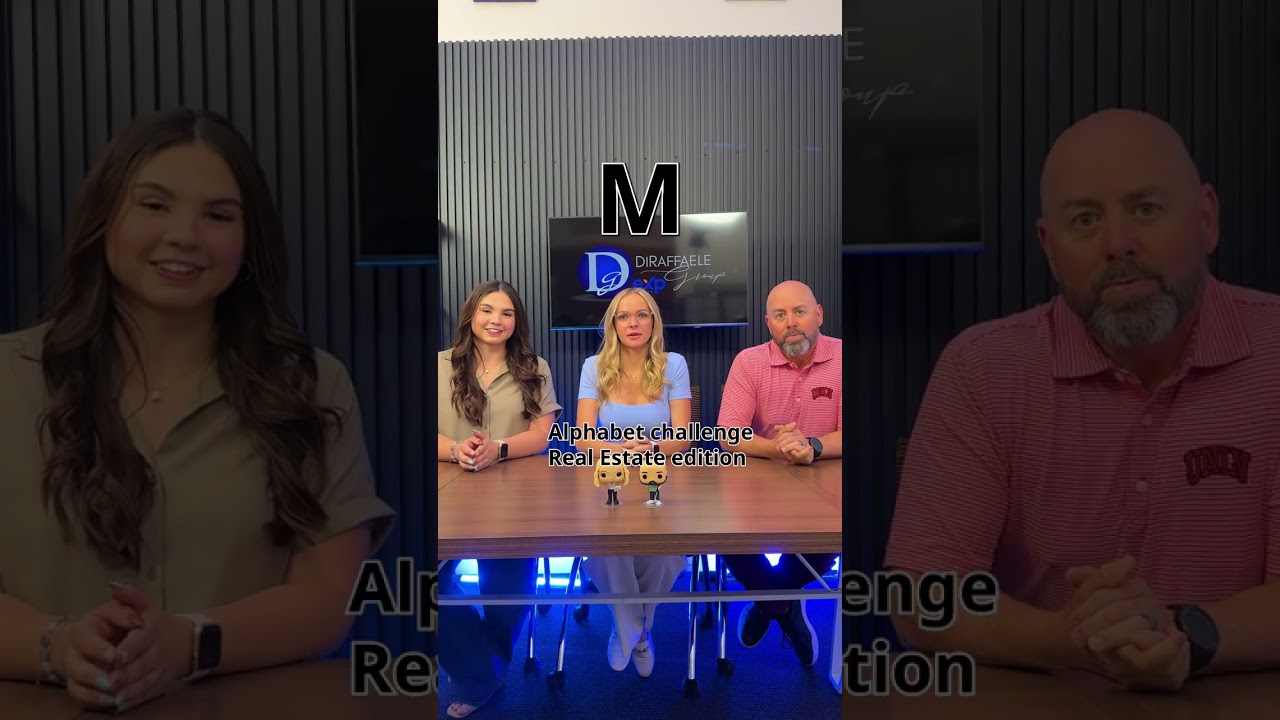
Real Estate Alphabet Challenge: Trio Edition — A Fun Way to Learn (and Win) in Today’s Market
Real Estate Alphabet Challenge: Trio Edition — A Fun Way to Learn (and Win) in Today’s Market
Short-form real estate videos often succeed because they do two things at once: they entertain and they teach. The Real Estate Alphabet Challenge: Trio Edition concept (three people rapid-firing real estate words from A to Z) is a surprisingly effective way to surface the terms and decisions that actually shape outcomes for buyers, sellers, and investors.
Even if you’ve never tried an alphabet game, you can use the “Trio Edition” format as a practical learning tool: get two friends, coworkers, or family members and run through real estate concepts letter by letter. The point isn’t perfection—it’s building fluency so you can ask better questions, avoid costly surprises, and collaborate more effectively with your agent, lender, and attorney.
Below is a standalone, comprehensive guide inspired by the challenge format: a real estate A–Z with action steps, plus a trio-style way to practice it.
---
How the Trio Edition Challenge Works (and Why It’s Useful)
The rules:
- Three players.
- Pick a starting letter (A) and go in order.
- Each player must contribute a real estate term, concept, or strategy for the current letter.
- Bonus points for: defining it correctly, naming when it matters, and giving a real-world example.
Why it helps:
- It exposes knowledge gaps fast (“Wait—what’s escrow again?”).
- It improves communication (“We’re using the same words the same way.”).
- It encourages better planning (“We should budget for closing costs, not just a down payment.”).
If you want to level up, have one person act as the “buyer,” one as the “seller,” and one as the “agent/lender” while you play.
---
The Real Estate Alphabet (A–Z) — Trio Edition Cheat Sheet
Use this as your prompt list. You don’t need to memorize everything, but you do want to recognize the terms that come up in contracts, lender conversations, inspections, and negotiations.
A — Appraisal
An appraisal estimates a home’s value for the lender. If the value comes in low, the deal may require renegotiation, a bigger down payment, or a second opinion (when allowed).
B — Budget
Your budget is more than a monthly payment—include taxes, insurance, maintenance, utilities, and planned repairs. Lenders qualify you for a loan amount; your budget defines what you can comfortably sustain.
C — Closing Costs
Closing costs can include lender fees, title fees, escrow services, recording fees, and prepaid items. They’re often a meaningful chunk of cash on top of down payment.
D — Debt-to-Income (DTI)
Your DTI ratio impacts mortgage approval. Paying down high-interest or high-payment debt can change your buying power.
E — Escrow
Escrow is a neutral process/account where funds and documents are held until closing conditions are met. It’s also used in many loans to collect taxes/insurance monthly.
F — Flood Zone
A property’s flood risk can affect insurance requirements and ownership costs. Check official maps and ask for claims history where possible.
Authoritative reference: FEMA flood maps via the Flood Map Service Center.
G — Good Faith Negotiation
Successful transactions usually come from clear, documented negotiation—repairs, credits, timelines, contingencies. Emotional bargaining tends to backfire.
H — Home Inspection
A home inspection identifies material issues and safety concerns. It’s not a pass/fail test—it’s information that supports decisions and negotiation.
I — Interest Rate
Your interest rate affects payment and long-term cost. Ask about rate locks, points, and scenarios.
J — Joint Tenancy (vs. Tenancy in Common)
How you hold title impacts inheritance and rights. Discuss with an attorney for your situation.
K — Key Dates
Every contract has deadlines—inspection periods, financing deadlines, appraisal timelines, closing dates. Missing dates can weaken your position.
L — Location
Location still drives value: schools, commute, walkability, zoning, noise, and neighborhood trajectory.
M — Mortgage Preapproval
A preapproval strengthens your offer. It’s different from prequalification because it typically involves document review.
Learn the basics directly from the CFPB.
N — Neighborhood Comps
Comparable sales (comps) support pricing and appraisal expectations. Great comps are recent, nearby, similar in size/condition, and adjusted reasonably.
O — Offer Strategy
Price is only one lever. Also consider earnest money, contingency strength, closing timeline, escalation clauses (where appropriate), and seller preferences.
P — Property Taxes
Taxes vary widely by location and can change after purchase. Understand how assessments work in your area.
Q — Quitclaim Deed
A quitclaim deed transfers interest someone may have in a property, often used between family members. It’s not the same as guaranteeing clear title.
R — Repairs vs. Credits
After inspection, you may request repairs, a credit, or a price adjustment. Credits can be simpler; repairs can reduce post-close headaches—choose strategically.
S — Seller Disclosures
Disclosures provide known property history and issues. Read them early; they can influence your inspection focus and risk assessment.
T — Title Search & Title Insurance
A title search checks ownership and liens; title insurance helps protect against covered claims. This is a core part of risk management at closing.
U — Underwriting
Underwriting is the lender’s risk review. Expect requests for documentation—even late in the process.
V — Valuation (Beyond the Appraisal)
Market value is influenced by condition, upgrades, lot, layout, local demand, and recent sales—not just a single number.
W — Walkthrough
A final walkthrough confirms the property’s condition is consistent with the agreement, repairs are complete (if applicable), and major systems appear intact.
X — “X-Factor”
The X-factor is the thing you can’t easily quantify: a unique lot, exceptional light, a rare floor plan, or a view. It can justify premium pricing—or make resale tricky.
Y — Yard & Exterior
Exterior condition—roof, grading, drainage, trees—can create real costs. Many expensive issues start outside.
Z — Zoning
Zoning affects what you can do with the property: additions, ADUs, home-based business, rental restrictions, and setbacks.
---
How to Use the Alphabet Challenge to Make Better Decisions
1) Buyers: Turn letters into a checklist
- A/M/U: Appraisal, preapproval, underwriting — build a timeline with your lender.
- H/R/W: Inspection, repair strategy, walkthrough — control risk before closing.
- C/P: Closing costs and taxes — prevent cash-to-close surprises.
2) Sellers: Use the game to prep your listing
- N: Pull comps and set a pricing narrative.
- S/T: Disclosures and title readiness reduce delays.
- O: Offer strategy isn’t just highest price—evaluate certainty and terms.
3) Investors: Add an “ROI layer” to every letter
- P: Taxes and insurance hit cash flow.
- Z: Zoning and rental rules can make or break a strategy.
- V: Value-add opportunities (layout, deferred maintenance) drive upside.
---
Trio Edition: A 15-Minute Practice Script
If you want a fast team exercise, try this:
- Round 1 (5 minutes): Each person gives one term per letter (A–E only). No definitions.
- Round 2 (5 minutes): Same letters, but now define the term in one sentence.
- Round 3 (5 minutes): Add a “when it matters” scenario (e.g., “Appraisal matters when you’re financing and the lender needs value support.”).
Repeat with the next letters on another day. Consistency beats cramming.
---
Reliable Resources (Use These When the Letters Get Real)
When you move from game to transaction, rely on primary sources:
- Consumer Financial Protection Bureau (CFPB) for mortgages and closing guidance.
- FEMA for flood mapping.
- IRS for general info on homeownership tax topics.
- NAR for broad market and consumer real estate explainers.
---
Final Takeaway
The Real Estate Alphabet Challenge: Trio Edition is more than a fun short-form idea—it’s a simple framework for building real-world competence. If you can explain the basics of appraisal, escrow, inspections, underwriting, title, and zoning without guessing, you’re far less likely to be surprised (or pressured) during a transaction.
Grab two people, run the challenge, and turn the letters you miss into the next topics you learn. In real estate, clarity is leverage.
---
Source video: Watch "Real Estate Alphabet Challenge: Trio Edition!" on YouTube by DiRaffaele Youtube Videos