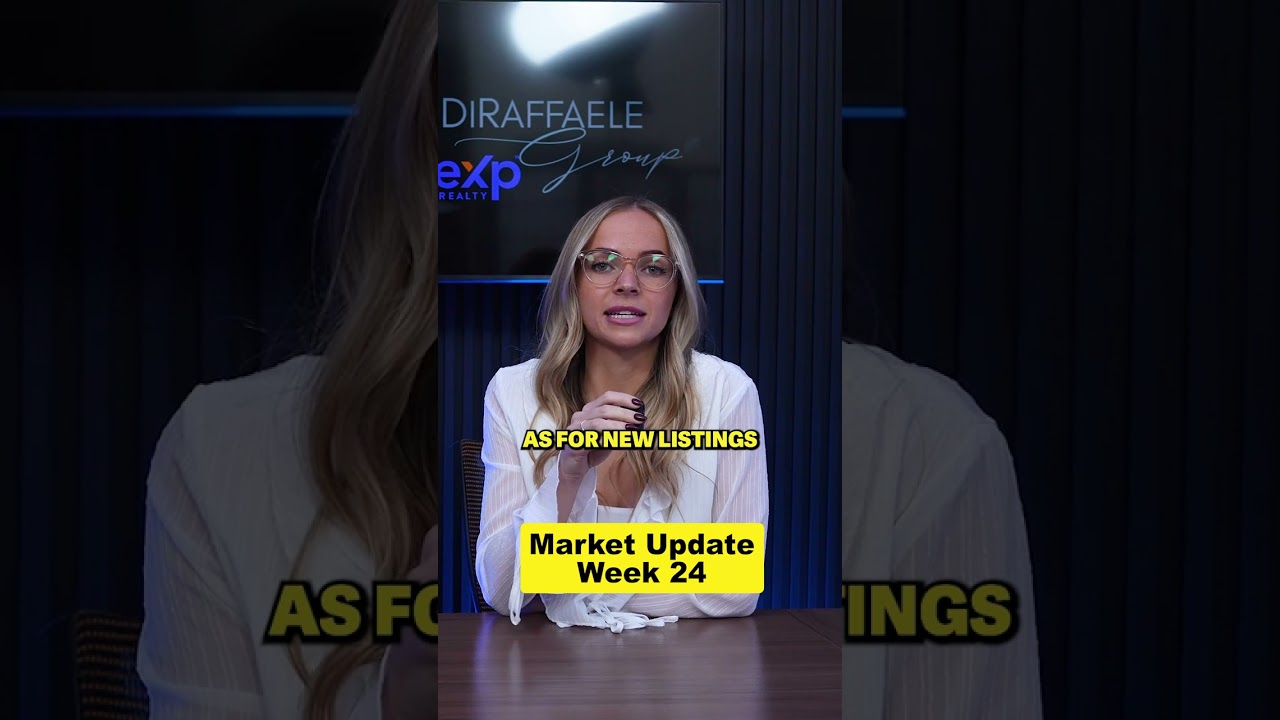
Week 24 Market Update: Rates, Inventory, and What Buyers & Sellers Should Watch
Week 24 Market Update: Rates, Inventory, and What Buyers & Sellers Should Watch
The housing market rarely moves in a straight line—and by week 24 of the year, the story is usually a mix of seasonal momentum, shifting interest-rate expectations, and the local realities of supply and demand. Even when national headlines feel dramatic, the most actionable “market update” is the one that translates macro trends into practical decisions: when to list, how to price, what to negotiate, and where buyers still have leverage.
This week 24 market update breaks down the key forces typically shaping real estate right now—mortgage rates, inventory levels, buyer behavior, and price signals—and turns them into clear takeaways for buyers, sellers, and investors.
> Note: The linked video is a short-form market update without an available transcript, so this article is an original synthesis of the most relevant, commonly reported week-to-week drivers in today’s housing market and how professionals use them to guide strategy.
---
1) Mortgage rates: the market’s “volume knob”
If home prices are the headline, mortgage rates are the throttle. Small rate moves can meaningfully change monthly payments, which then changes how many buyers can qualify—and how confident they feel making offers.
What to watch in week 24
- Rate volatility matters as much as rate level. When rates bounce around week-to-week, buyers tend to pause, sellers hesitate to list, and negotiations get more cautious.
- Payment sensitivity is driving behavior. Many buyers aren’t asking “What’s the price?” first—they’re asking, “What’s my payment?” That pushes demand toward homes that fit the monthly budget, not just the wish list.
For current benchmarks and weekly trend context, consult widely used sources like:
- Freddie Mac’s weekly survey: https://www.freddiemac.com/pmms
- Mortgage News Daily’s rate tracking: https://www.mortgagenewsdaily.com/mortgage-rates
Practical takeaway: If you’re buying, focus on financing strategy (rate locks, buydowns, lender credits) as much as the offer price. If you’re selling, recognize that rate spikes can reduce buyer urgency—even if your neighborhood fundamentals are strong.
---
2) Inventory: tight overall, but building in pockets
Inventory is the second major lever after rates. Markets with thin inventory tend to hold prices up and keep competition alive; markets with rising inventory often become more negotiable—especially for homes that aren’t perfectly updated or ideally located.
Week 24 pattern to look for
- Seasonal listings typically increase into late spring/early summer, but the “lock-in effect” still influences many homeowners who hold low-rate mortgages and don’t want to trade up into a higher payment.
- Inventory is rarely uniform. Condos, entry-level homes, and move-in-ready properties can behave very differently from larger homes or properties needing renovation.
For data-driven visibility, these sources are useful starting points:
- Realtor.com weekly inventory and asking price trends: https://www.realtor.com/research/
- Redfin market insights and weekly data: https://www.redfin.com/news/data-center/
Practical takeaway: Track your neighborhood’s active listings, not just the national narrative. A “hot” national market can still mean a soft micro-market if new listings pile up faster than pending sales.
---
3) Pricing and negotiations: the gap between list price and market price
By mid-year, many markets show a more nuanced dynamic:
- Well-priced homes still move quickly, often with clean terms.
- Overpriced homes sit longer, then require price reductions.
- Condition and presentation matter more when buyers have options.
Common week 24 signals
- Rising days on market: suggests buyers are more selective.
- More price reductions: indicates sellers are testing higher prices and adjusting.
- Increased seller concessions: lenders and agents often see more credits for closing costs, repairs, or temporary rate buydowns.
If you want a broader macro backdrop for price movements and construction trends, the Federal Reserve’s housing data hub is a reliable reference point:
- FRED Housing indicators: https://fred.stlouisfed.org/categories/97
Practical takeaway (sellers): Pricing is a marketing strategy, not a victory lap. If you miss the market in the first 1–2 weeks, you often end up negotiating from a weaker position later.
Practical takeaway (buyers): A slower market isn’t a “crash”—it’s leverage. Use inspection contingencies, repair requests, and closing-cost credits intelligently rather than just pushing for a lower price.
---
4) Buyer demand: resilient, but more value-conscious
Even with affordability challenges, demand often remains surprisingly steady for two reasons:
- Life events don’t wait (new jobs, growing families, relocations).
- Many buyers have substantial equity or cash (especially repeat buyers), reducing reliance on perfect rate conditions.
What changes is the type of demand:
- Buyers prioritize value and payment stability.
- Many look for homes where they can avoid major renovations.
- Some shift to smaller homes, different neighborhoods, or townhomes to stay within budget.
For ongoing affordability and consumer trend context, the National Association of Realtors provides widely cited research:
- NAR Research & Data: https://www.nar.realtor/research-and-statistics
Practical takeaway: Sellers should expect buyers to scrutinize utility costs, age of major systems (roof/HVAC), and repair history. Buyers should come prepared with a clear “must-have vs. nice-to-have” list—because the best deals often appear when you can act quickly on the right fit.
---
5) A simple “Week 24 checklist” for smart decisions
If you’re buying this week
- Get fully underwritten (not just pre-qualified) if possible; it strengthens your offer.
- Compare rate lock options and ask about temporary buydowns (e.g., 2-1 buydown) if seller credits are available.
- Watch for listings with longer days on market—they’re more likely to negotiate.
- Focus on total cost to own (insurance, taxes, HOA, maintenance), not just the mortgage payment.
If you’re selling this week
- Audit competing listings: which homes are truly similar, and which are aspirational?
- Price for traffic in the first 7–10 days.
- Offer a clear value proposition: pre-inspection, repair receipts, or a concession package.
- Invest in presentation: professional photos, clean staging, and a strong first showing.
If you’re investing
- Underwrite conservatively: stress-test rent assumptions and vacancy.
- Pay attention to local supply pipelines (new construction and permits).
- Look for opportunities where cosmetic updates create value without major structural risk.
---
6) What could change the market in the next few weeks?
Housing tends to respond quickly to expectations. In the near term, the biggest catalysts are:
- Inflation and jobs data, which influence interest-rate expectations.
- Shifts in consumer confidence and affordability.
- Local inventory surges (new subdivisions, seasonal listing spikes).
For rate policy context and macro commentary, the Federal Reserve is the primary source:
- Federal Reserve (policy and updates): https://www.federalreserve.gov/
Bottom line: Week 24 is often when the market’s “tone” becomes clearer. If rates stabilize and inventory rises modestly, negotiations become more balanced. If rates fall meaningfully, competition can return quickly—especially in supply-constrained areas.
---
Conclusion: A balanced market rewards preparation
This week 24 market update isn’t about predicting the future—it’s about making the present measurable. Track rates, inventory, and price reductions in your local area, and pair that information with a clear plan.
- Buyers: win with financing readiness and smart concessions.
- Sellers: win with accurate pricing and excellent presentation.
- Investors: win with conservative underwriting and local demand analysis.
If you treat the market like data—not drama—you’ll make better decisions regardless of what the next headline says.
---
Source video: Watch "Week 24 Market Update" on YouTube by DiRaffaele Youtube Videos