Why Home Sales Drop in January | Las Vegas Real Estate Market Update 2026
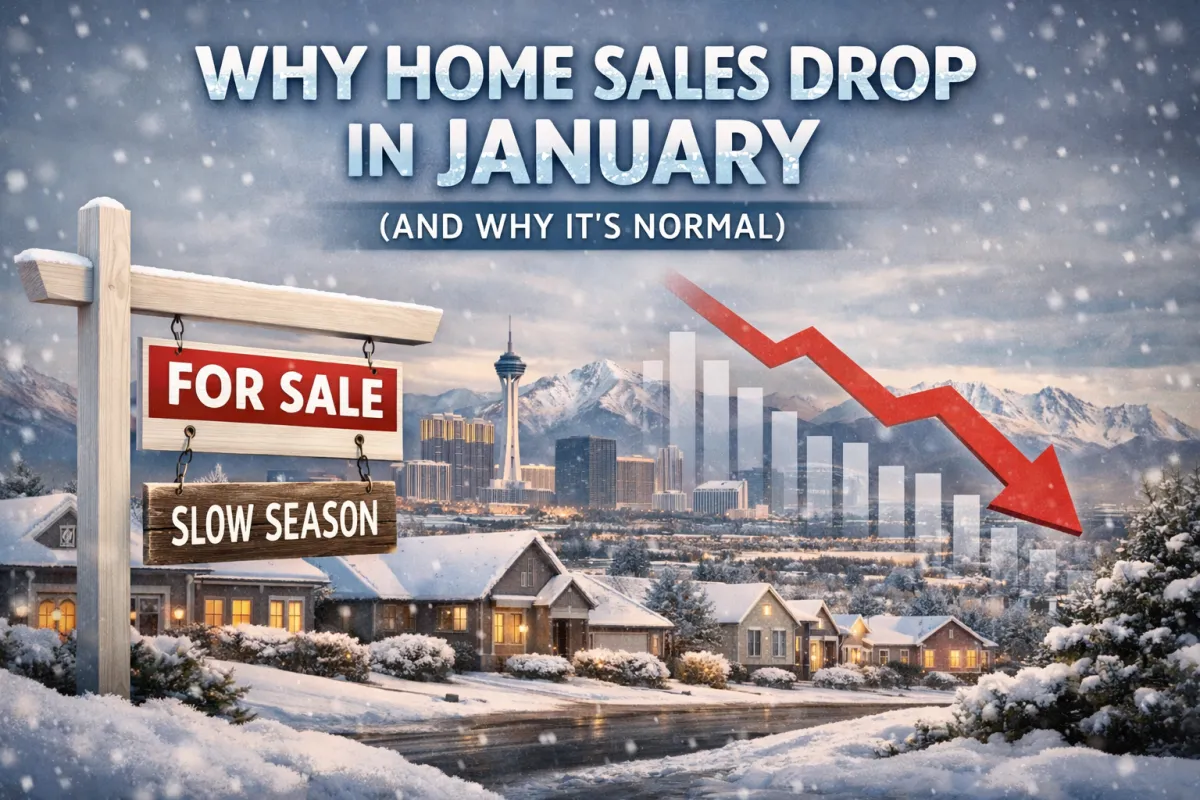
📉 Why Sales Drop in January (And Why It’s Normal)
While January sales were down 19.8% from December, this is a very typical seasonal pattern in the Las Vegas real estate market — and in most housing markets across the country.
Here’s what’s really happening behind the numbers:
1️⃣ The December Pull-Forward Effect
Many motivated buyers and sellers try to close before year-end for tax reasons, corporate relocations, bonus timing, or personal goals. That often boosts December numbers, making January appear softer by comparison.
In other words, some of January’s activity actually happened early — in December.
2️⃣ The Holiday Slowdown
From mid-December through early January:
Fewer homes are listed
Buyers pause while traveling
Showings temporarily decline
Decision-making slows
This short-term pause shows up in January’s closed sales data, even though demand hasn’t disappeared.
3️⃣ Winter Psychology
Even though Las Vegas winters are mild, buyer behavior still follows a seasonal rhythm.
Activity typically ramps up in spring when:
Families prepare for summer moves
Corporate relocations increase
Out-of-state buyers become more active
Warmer weather nationwide fuels mobility
January tends to be a transition month — not a downturn month.
4️⃣ The Real Health Indicators
Month-to-month swings matter far less than core fundamentals like:
Inventory levels
Days on market
Buyer absorption rate
Price stability
Notably, 65% of homes are still selling within 60 days, which indicates steady demand and active buyers in the market.
🧠 The Big Takeaway
A January dip does not signal market weakness. It reflects normal seasonality — not structural decline.
In fact, seasonal slowdowns can create:
Opportunity for buyers (less competition) 🏡
Motivated and serious buyer pools for sellers 💼
Strategic positioning ahead of the spring surge 🌸
The Las Vegas market is following a predictable seasonal pattern — and that’s a sign of stability, not stress.
